Author: Brad Miner

Three Crises – and Three Opportunities

A wickedly funny website on matters Catholic, Ignatius His Conclave, recently pointed out that, in the currently casual logic of the Church, Communion for the divorced and remarried is: 1) a conscience matter (Cardinal Blase Cupich in February), or 2) subject to local regulation, which may lead to differences among bishops and national bishops’ conferences...
The Haircut: a Review of “Samson”

In 1935, Cecil B. DeMille paid Harold Lamb, a writer of historical novels, the 2018 equivalent of $150,000 for a “treatment” (a dozen-or-so pages) of the story of Samson from the Book of Judges – such was the popularity of the Biblical epic. And DeMille’s Samson and Delilah would become a huge success, although it...

1968 at 50

A wise priest/professor at Notre Dame told me recently that the great Catholic historian Philip Gleason (now emeritus at ND) often counseled people to keep calm: “Remember, at least it’s not 1968.” I’m not so sure. We’ve just had an archbishop, head of two pontifical councils, praise a nasty Communist China with a recklessness not...

Five Paradoxes of the Sexual Revolution, Part II

A third paradox has become the dominant social media soap opera of our time, a story that goes like this: The revolution was supposed to empower women. Instead, it ushered in the secular sex scandals of 2017 etc., and the #MeToo movement. In addition to the fact that it made marriage harder for many women...

Five Paradoxes of the Sexual Revolution, Part I

Academics vary about their definitions of the sexual revolution, but here’s one straightforward, uncontroversial formula. The “revolution” refers to the changes in sexual behavior and mores following the widespread adoption and approval of reliable contraception over a half-century ago. The first accelerant here is the birth control pill, approved by the FDA in 1963, and...

The Apostolic Secession

An axiom in the legal profession is that a lawyer should never ask a question in court to which he doesn’t already know the answer. Getting an answer you don’t want can be embarrassing and may even harm your case. Pope Francis has asked young people to write to him with their concerns. This is...

The China Syndrome

In several decades of living in Washington DC, I’ve met my share of scamps and scalawags, fabulists and outright liars. It would take a modern Dante to determine which circle of Inferno each type of misbehavior merited. But of one thing, I am certain: at least in my own my own experience, I’ve never encountered...

Journalism of peace?

Raymond Arroyo and Faith & Reason Institute’s Robert Royal discuss the pope’s recent comments about journalism (the Serpent in the Garden of Eden spread the first “fake news”), the Holy Father’s sex-abuse comments in Chile, and the Vatican’s decision to replace validly appointed Chinese bishops with state-sponsored ones.

Why the Pro-Life Movement Will Live Long and Prosper

At First Things magazine, FRI’s Senior Research Fellow reflects on the future of the movement and its goals. The situation may seem dark indeed, but as Mary writes: . . . there’s a light on the horizon that pulses brighter with every passing year. One area we shouldn’t worry about when we worry about secularization...

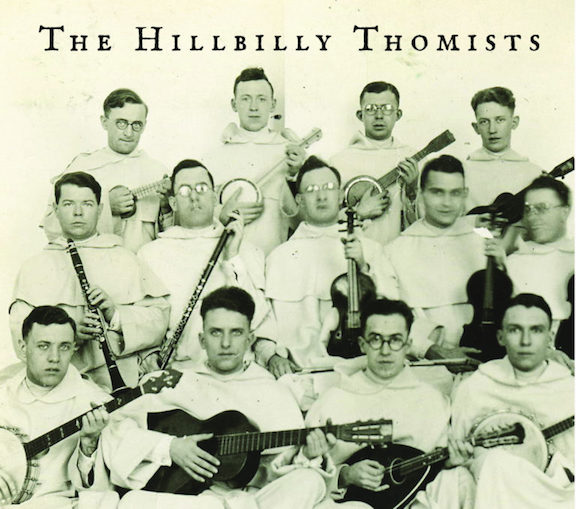
Hillbilly Thomists

I grew up in the Midwest. My folks were both well-educated people. In fact, both were Phi Beta Kappa – a standard to which I failed to ascend – and my father was a professor and department chairman at THE Ohio State University. The Miners and my mom’s people, the Earnharts, were all Buckeyes, unto...

Catholicism in the 21st Century

Fr. Thomas White talks about his new book on Catholicism, In the Light of Christ, and the challenges and promise of Catholicism in the 21st century, followed by comments and conversation with Mary Eberstadt and Robert Royal. The Light of Christ provides an accessible presentation of Catholicism that is grounded in traditional theology, but engaged with...

Where the Revolution has Led: An Interview with Mary Eberstadt

Flynn: What are identity politics? Eberstadt: The Stanford Encyclopedia of Philosophy defines identity politics as “political activity and theorizing founded in the shared experiences of injustice of members of certain social groups.” This is not politics as usual. It’s instead an assertion of identity with one or another group that’s said to be oppressed. Believing oneself...