Recent News

A Synod of No Surprises

Passing through the D.C. Metro recently, I noticed a (muted) Pride-Month poster – rainbow strips peeping between black bands – and a caption that read something like, “The Metro Authority believes that transportation is for everyone.”

Washington PR consultants doubtless did very well out of this ad campaign – as “consultants” of all kinds tend to do in our society – speaking out bravely against a view (Public transportation for white Christian nationalists only?) held by absolutely no one. But unlike the Instrumentum Laboris (IL), the Vatican’s recently issued Working Document of the Synod on Synodality, at least the D.C. Metro does not believe that the central value of transportation is transportation itself. The Metro actually embodies the once-obvious human view that the value of transportation means moving in predictable ways from one place to another, towards a specific goal, for an identifiable reason.

The IL opens with a proclamation: “The People of God have been on the move since Pope Francis convened the whole Church in Synod in October 2021.” Really? Meetings have certainly been held. Long and windy and vague texts produced. All this, it’s said, better to preach the Gospel.

But what is that Gospel?

For the rest of the column, click here . . .

The Gentleman from Verona

Romano Guardini (1885-1968) was born in Verona in Northern Italy, but while he was very young his family moved to Mainz in Germany, where his father was Italian consul. Except for regular trips to Italy, he lived in Germany during his formative years and wrote in German. For many thinkers, this history might be a mere biographical detail. In Guardini’s case, it has considerable significance.

He was a beloved figure among his students and had an enormous influence on the Catholic Church and European culture in the twentieth century – and beyond. He inspired later thinkers as diverse as von Balthasar, Pieper, Giussani, Ratzinger (Benedict XVI), and Jorge Mario Bergoglio (Pope Francis). His influence probably owes something to his dual heritage, which combines German academic rigor with a gentler Italian humanism.

Guardini’s greatest and best-known books – The End of the Modern World, The Spirit of the Liturgy, and The Lord –have remained in print and influenced generations. The End of theModern World was particularly prescient. In 1950, Guardini could already write that it was easy to describe the modern age because, “in all crucial respects the modern world has come to an end.”

For the rest of the column, click here . . .

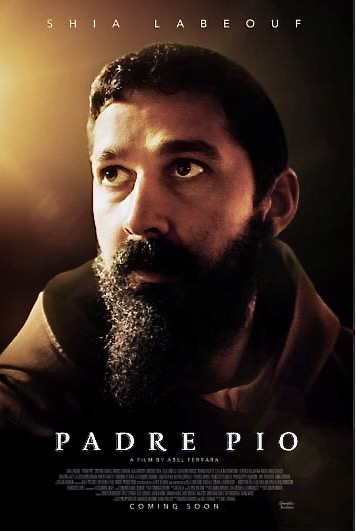
Cinematic Cynicism: a Review of ‘Padre Pio’

There may never have been a more cynical attempt to market a motion picture nobody would otherwise go to see – by giving it a title (and a poster image to go with it) that has next to nothing to do with the film’s actual content.

That poster features the film’s “star,” Shia LaBeouf, who is on screen for about as long as the donkey he rides in on in an early sequence of Abel Ferrara’s Padre Pio.

This is a publicity poster for the new drama “Padre Pio,” which premiered at last year’s Venice Film Festival and will be released in U.S. theaters and on demand June 2, 2023. (OSV News photo/Gravitas Ventures)

Padre Pio? Mr. LaBeouf impersonates the Italian saint who was marked with the stigmata of Christ, but we never see those holy wounds*** or get any sense of this character’s saintliness in a film that’s really about class war and the rise of fascism in Italy. Benito Mussolini came to power at just the time depicted in the film.

Maybe that could have been an interesting movie, but the scenes of the meetings and conversations of the would-be socialist revolutionaries and fascist bully boys of Padre Pio have all the gravitas of a low-budget telenovela. Mind you, the struggles of the poor in Italy against the entrenched upper classes were very real.

For the rest of the column, click here . . .

You Do Belong Here

We’re quite prone, in these days of political hysteria and fragility, to blow up discrete incidents – sensationally circulated on social media – into cosmic proportions. But every now and then something does turn up in the worldwide churn of pixels that shows a boundary has been crossed. That happened, I believe, last week in Canada, when a public school teacher told a Muslim student who was protesting Pride Month events by skipping class that if he didn’t respect LGBTQs by participating, “you don’t belong here.”

I’ve been waiting for this to happen for over two decades. The teacher has been described in the press as “unhinged” and an exception. But we know that’s not true. In Canada, the United States, several European countries, and beyond, “gender ideology,” as Pope Francis has rightly called it, is a new form of “cultural colonization.” It’s everywhere – and aggressive. (Query: then why doesn’t he confront that relentless proselytizing instead of indulging its representatives?)

It’s not only faithful Muslims who are coming to be regarded as outside the house of democracy. It’s Catholics, evangelicals, conservative and orthodox Jews, and ordinary parents who want their children – especially their young children – to be left alone on controversial matters in schools and other public venues. And not to be kept in the dark – or outright lied to – by government employees.

For the rest of the column, click here . . .

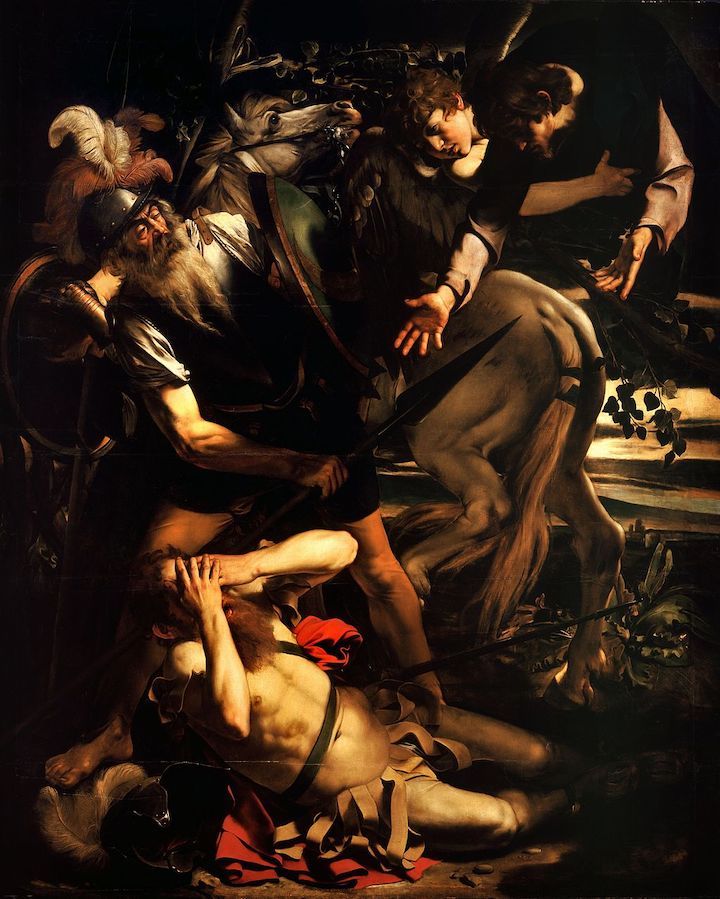
Caravaggio’s Road to Damascus

It’s the Year of Our Lord 34, and Saul is on his way to Damascus to persecute “the Way,” as Luke puts it in Acts 9. Then – all of a sudden – BOOM!

“Saul, Saul, why do you persecute me?”

I imagine a force accompanying the flash of “light from heaven”: a kind of silent explosion, as of a vacuum suddenly created or vacated. In any case, it knocks Saul from his horse. The horse is a disputed detail, not found explicitly in the text and partly an artistic embellishment, although Christ does say to Saul, “get up and enter the city, and you will be told what you are to do.” Note: Get up.

To me, this is the most fascinating and epoch-making of all the Biblical stories of the apostolic era: no blinding light, no Apostle Paul. It’s a moment painted by many artists, including twice by Michelangelo Merisi da Caravaggio (1571-1610): once in 1600 in The Conversion of Saint Paul (now in a private Roman villa, the Palazzo Odescalchi Balbi); and a year later in Conversion of Saint Paul on the Road to Damascus (in situ at the Cerasi Chapel of the church of Santa Maria del Popolo, also in Rome).

It’s interesting to note that the Odescalchi Conversion was a reject and the Cerasi a second attempt to please the patron who’d refused the first. (This happened a number of times in Caravaggio’s career.)

For the rest of the column, click here . . .

Simple – and Not So Simple – Gifts

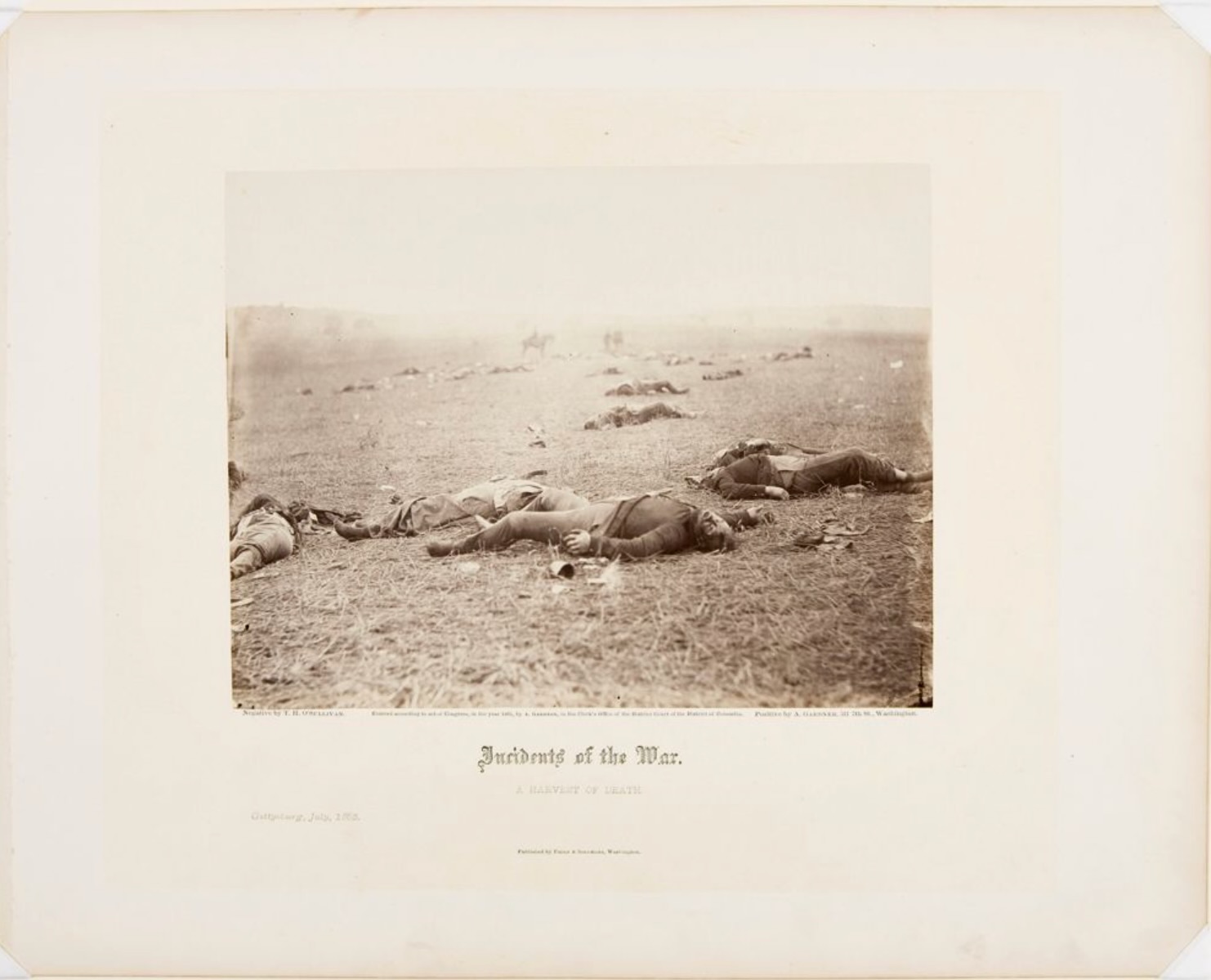
Today is Memorial Day. It’s altogether right and fitting to remember that we’re here today because hundreds of thousands of Americans, ordinary people called to extraordinary things, willingly gave up their lives. It’s one of the deepest  human ways of seeing ourselves in light of what Edmund Burke called our “unbought grace of life.”

Probably 25,000 dead on the American side in the Revolutionary War; around 620,000 (both sides) during the Civil War, i.e., the struggle to preserve the union and put an end to slavery. More recently, 58,000 in Vietnam. Another 7000+ in Afghanistan and Iraq. And more, sadly, to come.

For all the controversies surrounding every one of these conflicts, we – who despite our troubles, by historical standards, live lives of rare tranquility and ease – need to remember them with no little gratitude.

That is how civics teachers in schools once would have presented this holiday. I wonder what they do these days, when our public institutions show every sign of being mentally, morally, and spiritually disturbed?

I’m not a Civil War buff. But friends who are have taken me through sites in Virginia, which are historically fascinating and deeply moving. According to one source, deaths in the war between the states were “approximately equal to the total of American fatalities in the Revolutionary War, the War of 1812, the Mexican War, the Spanish American War, World War I, World War II, and the Korean War, combined.” For us in 2023, it’s especially urgent to remember these body counts when a nation forgets sacrifice for the common good and tears itself apart, as ours seems to be doing again.

For the rest of the column, click here . . .

To What Shall We Compare the Present Age?

One of the most remarkable features of the Gospels is how Jesus effortlessly tosses off unforgettable sayings, the kinds of phrases only the greatest thinkers and poets produce – and only rarely. As the American writer Randall Jarrell once put it, “ A good poet is someone who manages, in a lifetime of standing out in thunderstorms, to be struck by lightning five or six times; a dozen or two dozen times and he is great.” Jesus was – clearly – much more than a poet. But it’s still striking that he could say more memorable things in a few minutes on ordinary days than any figure in history. Pity the myopic Biblical scholars – or the many people now influenced by them – who believe that a gaggle of fishermen, tax collectors, and itinerant preachers just made a lot of it up.

Christ’s often-simple sayings bulk so large that it’s taken millennia of theologians, philosophers, saints, mystics, martyrs, priests, bishops, and popes even to begin to grasp what He said. And yet, at the same time, His words have spoken to the hearts of average people, not only in his day, but over ages, in “diverse” cultures, despite what seemed impossible obstacles. Aquinas thought one of the greatest Christian miracles was how a few humble men from a cultural backwater were able to convert the greatest empire (Rome) then in existence. A matter of sheer historical fact – and he lived before the Faith spread to the Americas, Africa, Asia, and the whole world.

That all this seems threatened now, and on every front, is reassuring in one way; it suggests that as dark as things seem at present, in both the Church and the world, the Gospel has shown itself to have an unsuspected power that cannot be predicted. It has always exceeded what we might “reasonably” expect. And could do so at any moment, even today.

In another way, it’s right to be worried because the present age seems not only mired in the usual human tangle of sin and ignorance. Our Western non-culture seems hell-bent on not only opposing but wiping out the very memory of the best that made us who we are.

For the rest of the column, click here . . .

Living through an Apocalypse

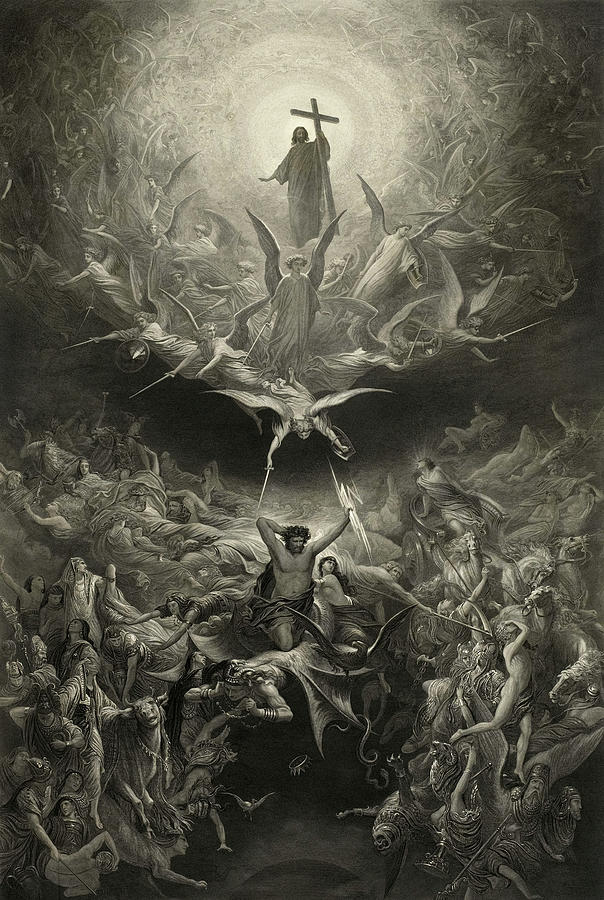
When the history of our times comes to be written, scholars won’t be able to ignore how much recent years have been marked by widespread feelings of apocalypse. That’s, of course, assuming that there are any historians who survive. Because from threats of nuclear war to climate change, from AI (artificial intelligence) to the digital technologies damaging our very bodies and brains, from the virtual erasure of the sex “binary” (i.e., women and men) to a media hell-bent on encouraging social division, it at least feels like the radical end – of something. Maybe everything. And not just for eccentric sects gathering on hilltops, waiting for the end. There’s a sense that the next year-and-a-half or so will be decisive both in American electoral politics (and society), and in the way the Synod on Synodality will affect the self-understanding of the One, Holy, Roman, Catholic, and Apostolic Church.

So, what do you do in apocalyptic times – real or imagined?  There’s the way of the world, and the way of wisdom.

The way of the world is hysteria – and, in fact, a strange liking for the constant agitation of the news and social media. If nothing else, it masks existential boredom, the kind of boredom that many people in developed societies feel on a daily basis when basic needs and even luxuries are readily available in relatively calm and peaceful settings. This achievement – the dream of ages – has come at the cost of regarding virtually the entire created universe as mere energy and matter to be exploited and manipulated for human benefit. Under the circumstances, for many people, it’s better – and easier – to let loose moral outrage in fights over climate change or racial “privilege” or recently invented “genders,” than to face the fundamental problem: the bleakness of modern materialism.

The way of wisdom, by contrast, is what it’s always been: a realistic acceptance that we all die, that an end will come, someday, even to the earth, the sun, the very created universe.

For the rest of the column, click here . . .

A Great Recent Ancestor

young man and woman were walking in Paris’s Jardin des Plantes in the summer of 1901. And contemplating suicide. It wasn’t romantic despair. They were in love and wanted to live. But as science students at the Sorbonne, they were taught that the world was without meaning, other than the arbitrary order that, scientists believed, had – randomly, somehow – come to be. Such a world seemed intolerable. They wanted something more, something that would give meaning and nobility and purpose to love and life.

The young man was Jacques Maritain, later the most influential Catholic philosopher of the twentieth century. (Friday was the fiftieth anniversary of his death.) The woman was Raïssa Oumançoff, Russian and Jewish, who after their conversion (via the novelist and certifiable madman Léon Bloy) became a poet and mystical writer. The world always tries to avoid – or at least postpone answering – the question they faced head-on. Ultimately that’s impossible, as even the modern existentialists knew quite well: It’s God or nothingness.

For us a century later, entangled in age-old questions in new-age forms, the Maritains are helpful ancestors: near enough for a sense of continuity, and different enough to show how the great tradition can revive and blossom even in the most unpromising circumstances.

Many Catholics, who should know better, disparage the Neo-Thomism that Maritain and others helped to advance in the first half of the twentieth century. Usually, because they favor the subsequent personalist and communitarian nouvelle théologie and its developments in figures like Karol Wojtyla and Joseph Ratzinger. But this is to create a division within the polyphony of Catholic tradition where there need not be one, especially decades later when we need what both currents can give us.

For the rest of the column, click here . . .

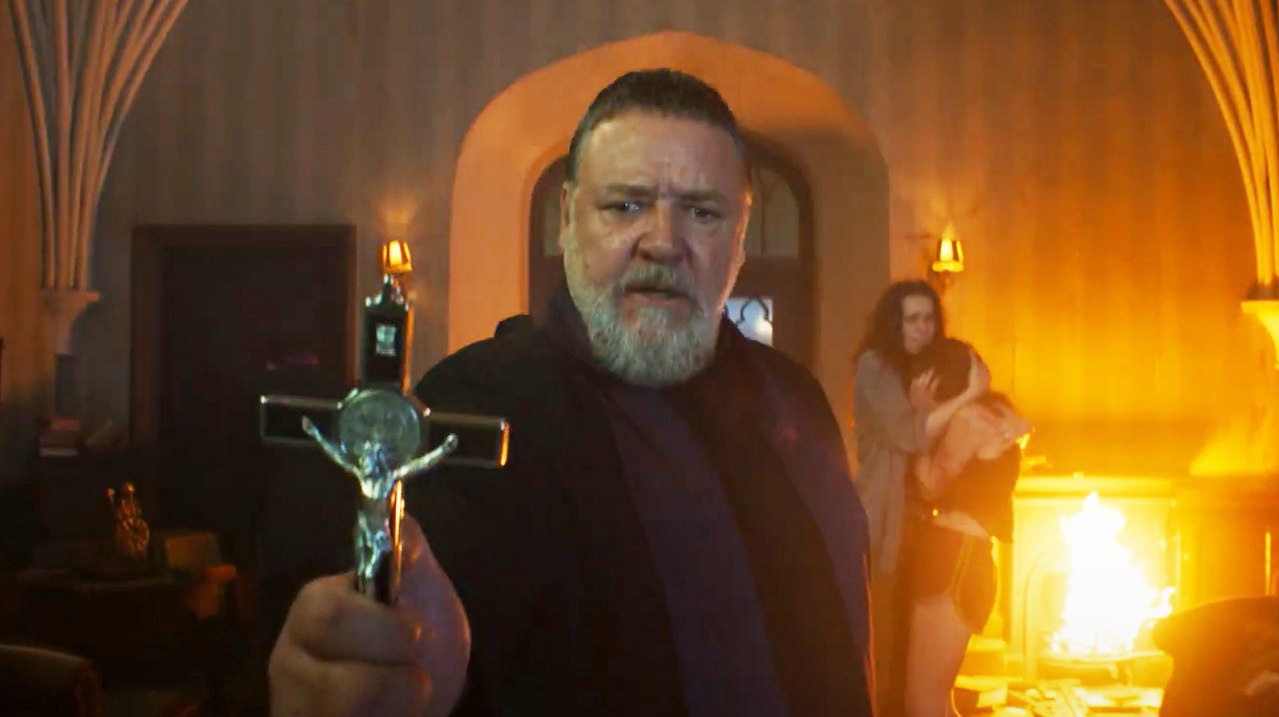
Men with Beards: A Review of ‘The Pope’s Exorcist’

Satan is real. . .and really dangerous.

C.S. Lewis put it succinctly in the preface to The Screwtape Letters:

There are two equal and opposite errors into which our race can fall about the devils. One is to disbelieve in their existence. The other is to believe, and to feel an excessive and unhealthy interest in them. They themselves (the devils) are equally pleased by both errors and hail a materialist or a magician with the same delight.

William Friedkin, director of The Exorcist (1973), made a documentary, released in 2017, called The Devil and Father Amorth. “Amorth” referring, of course, to Fr. Gabriele Amorth, chief exorcist of the Diocese of Rome from 1986 until 2016. Friedkin’s documentary begins in conversation with Jeffrey Burton Russell, author of The Devil (1977), Satan(1981), Lucifer(1984), Mephistopheles (1986) and The Prince of Darkness (1988), in which Burton takes up where Lewis left off:

People ought to stay away from the subject as much as possible. The more you open yourself to thinking about this stuff and start feeling about this stuff, the more room you allow for the supernatural power of evil to come in.

Friedkin chose not to stay away. He filmed Fr. Amorth doing one of his last exorcisms: of an Italian woman, Christina, whom Amorth had already exorcized eight times.

To read the rest of the review, click here . . .