Recent News

A Catholic Cathedral: “A Sort of World”

Unless there’s a last-minute change of orders in the hours between this being written and the opening of St. Peter’s Basilica Monday morning, the Church in Rome will have taken another, bizarre, almost inexplicable step in an age that can little afford the West’s central spiritual institution to go even more wobbly.

I refer, of course, to the strange decision to prohibit Masses being said in St. Peter’s on side altars, often on the spur of the moment, in various languages; and to restrict everyone attending Mass in the Basilica to the few central services offered only in Italian and Latin.

This may seem a small matter, especially during the COVID lockdowns, when there are few pilgrims entering St. Peter’s anyway. But this was not an order issued in response to the potential dangers from the virus at side-altar Masses, nor does it bear any explanation that this is just a temporary measure that will be suspended when conditions are “safe.”

No, it reflects yet another instance of the Church – or at least some high-placed officials in the Vatican – reducing the breadth and depth that Catholicism should offer to God’s holy people.

Click here to read the rest of Professor Royal’s column at The Catholic Thing . . .

RIP Jude Dougherty

Jude Patrick Dougherty (1930-2021), the legendary dean of the Catholic University of America (CUA) School of Philosophy, was buried on Monday. He was the first layman to hold that post, succeeding the equally legendary Msgr. John K. Ryan in 1966, a year after the close of Vatican II and at a troubled time in the Church and the world. It was a near miracle that, despite the turmoil inside and outside the university, he was able to hold the School of Philosophy on a basically steady course – a Catholic course that remained close to the great neo-Thomist tradition, but also actively engaged modern philosophical currents, without losing its footing.

I’m not sure how I met Jude – it was decades ago now. But he had a rare way of making friends and welcoming people – notably in 1976 a then-obscure bishop of Krakow named Karol Wojtyla whom he invited to lecture at CUA and remained friends with throughout his long papacy. In 1999, St. JPII made him a Knight of the Order of St. Gregory for his many services to the Church.

But his hospitality embraced multitudes, even young people just starting out, as I was back then. In several ways, I think it was partly his influence, not intentionally but indirectly, that kept me from being tempted to go down a Washington political rabbit hole at the think-tank where I was working. Such personal influence is hard to gauge, but for me – and I know for many others – it certainly existed and made a difference.

Click here to read the rest of Professor Royal’s column at The Catholic Thing . . .
“Practicing” Catholics

That we even have the term “practicing Catholic” is revealing. Despite living in New York for the last forty-four years, I don’t think I have ever heard any Jewish friend be called a “practicing Jew,” although more often Jews here are referred to by more specific adjectives: Orthodox, ultra-Orthodox, Conservative, liberal, Reform, secular. Most often, Jews who attend Sabbath services are “observant,” although I suspect that term may seem odd to the Haredi.

Anyhow, observant may be analogous to practicing.

But I also can’t recall ever hearing anybody describe themselves as a practicing Methodist or Presbyterian or Episcopalian or Lutheran, but, obviously, I haven’t been everywhere or spoken to everybody, so I haven’t heard everything. Still, I haven’t heard that.

To the extent that this is true, it’s because we Catholics know only too well that a whole lot of people who call themselves “Catholic” have very little knowledge of the faith and put very little of what they do know into use. They favor “a woman’s right to choose” and abortion, and they disfavor getting up on a Sunday morning and going to Mass. You could say they’re “out of practice,” the way I am with French and the drums, which were old passions allowed to cool.

Click here to read the rest of Mr. Miner’s column at The Catholic Thing . . .
Lent and American Catholic Exceptionalism

Students of International Affairs sometimes debate American Exceptionalism: the idea that, by the unique nature of its founding, America is a special product of history. You can reach different conclusions about what that means – both positive and negative. People do, and the debate goes on.

Personally, I doubt we’re much above – as people – the general human level. But we’ve been called to play a special role in modern times. We’re an “almost chosen people” as Lincoln put it, tentatively but accurately. And we see in China’s rise and Russia’s machinations – among other actors – what it means for the world if America recedes.

It’s not only Americans who have been fascinated with American Exceptionalism. The great Catholic philosopher Jacques Maritain lamented in his Reflections on America: “You are advancing in the night, bearing torches toward which mankind would be glad to turn; but you leave them enveloped in the fog of a merely experiential approach and mere practical conceptualization, with no universal ideas to communicate. For lack of adequate ideology, your lights cannot be seen. I think it is too much modesty.”

That was another age (1956) and decades later we need to re-teach Americans themselves what once made this country great. But not that long ago Maritain could speak like that at the University of Chicago, when even our secular academies were willing to give a hearing to authentic Catholic thought – and a positive view of America. Today, there are over 200 Catholic colleges and universities in America, a large proportion of the Catholic institutions of higher learning in the whole world. Few of them would entertain the kind of arguments Maritain put forward.

Click here to read the rest of Professor Royal’s column at The Catholic Thing . . .

Bishops Misfire on “Racial Equity”

The American bishops drew a crucial distinction in a statement on President Biden’s Inauguration Day between things on which they can cooperate and “dialogue” with the new administration and those on which they cannot. Those distinctions were absolutely necessary to avoid the impression – amounting to grave scandal – that they had no problem with a self-proclaimed “Catholic” taking steps to further abortion, homosexuality, or transgenderism, all of which have been criticized by Pope Francis as a kind of “ideological colonization” in the developing world, but also in developed nations.

So far, however, almost no one has paid attention to potential dangers in the other half of the bishops’ Inauguration Day statement, those issues on which the Biden administration is supposedly “good” – immigration, environment, racism, etc. – as if other approaches to dealing with these matters than the usual progressive pieties are “bad.”

The bishops need to pay careful attention to what they and the administration mean – and even the wisdom of entering into various controversies – when they “dialogue” about social problems in this highly polarized period. For example, they just commended Biden (see here) for promoting “racial equity” in housing and prisons.  Equity sounds like good-old American equality. But in the current lexicon of Critical Race Theory and Critical Legal Theory, “equity” means something far different, and far closer to the ideological extremism of Black Lives Matter than Liberty and Justice for All.

Click here to read the rest of Professor Ropyal’s column ay The Catholic Thing . . .

Bonagura’s Catechism

ck in April, David Bonagura wrote a column here (“Will Catholics Return to Mass”) in which he noted that Catholics are used to facing lousy odds: “Post-COVID-19 Catholicism does not look promising for religious practice, but when does the state of the world ever look good for the Church? Still, as has happened again and again in history, crises in the world have inspired renewals in the Church.”

From his mouth to God’s ear.

I have no idea how many adult catechumens entered the Church in 2020. The pandemic made in-person catechesis difficult, and I also don’t know how many dioceses moved their RCIA classes online. In both 2018 and 2019, somewhere in the neighborhood of 30,000 Americans “crossed the Tiber,” but the pandemic will surely have cut substantially into that number over the last twelve months. And the coronavirus will just as certainly depress the numbers of those willing to become Catholic for who-knows-how-many more months to come. And these may be losses we’ll never recover.

If true renewal does happen and the Body of Christ grows, it can only come from the kind of catechesis that forthrightly presents Church history and dogma in a way that is both authoritative and appealing.

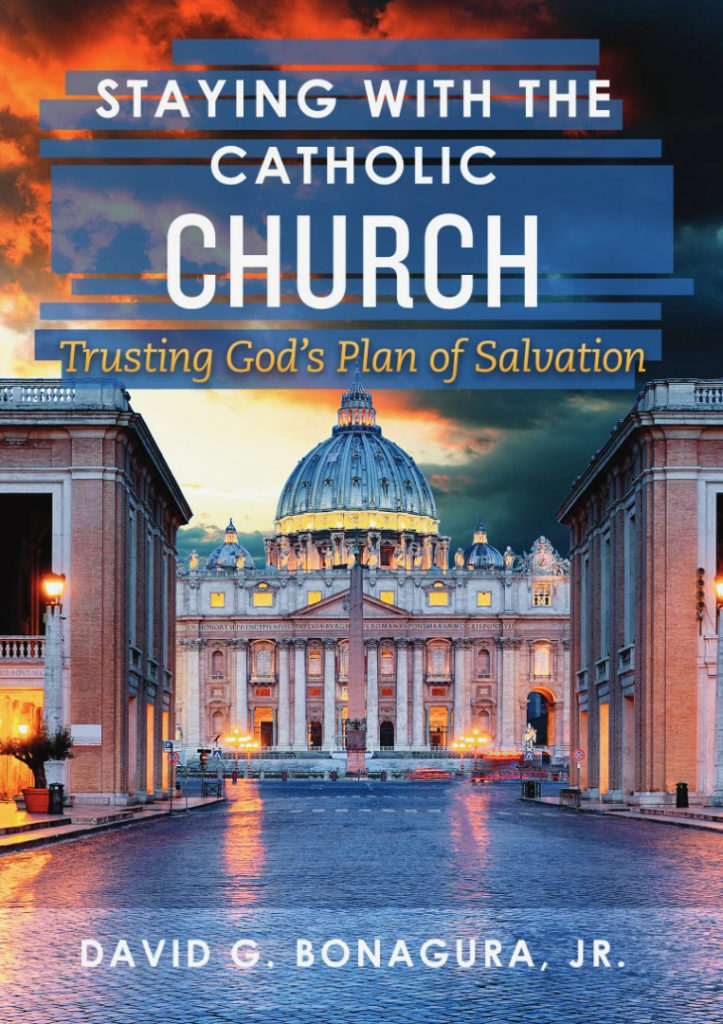
I suppose the Church could begin advertising: Come to the Church that’s been faithfully following Jesus since 33 A.D. You’ll be welcomed with open arms. [Imagine an accompanying photo of Vatican Square’s colonnade.]

Click here to read the rest of Mr. Miner’s column at The Catholic Thing . . .
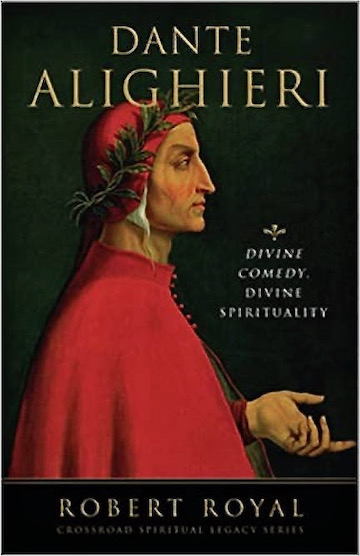
A Divine Comedy in 2021

Pope Francis has proclaimed 2021 as the Year of St. Joseph, which involves a host of good things, including plenary indulgences. He has also designated this year to be specially focused on the family, including special study of Amoris Laetitia on its fifth anniversary. We’ll see how that works out. (The Vatican is mistaken if it has calculated that the controversy has diminished, let alone gone away, about that document’s hints that couples living in what is objectively adultery may subjectively be in a state to receive Communion.)

I have no authority to proclaim anything about anything. But if someone were to ask me, I’d suggest that 2021 also be a Year of Dante, who died 700 years ago on September 13, 1321 of malaria, which was the COVID of his time. I looked into the question and see that Italy has already done that. But many people outside Italy need what Dante can give. We’re all sick and tired of the daily grind of viruses, Twitterized politics, and Church controversies at the moment and could use something that will ground us in something both deeper and quite different. And something to lift us up a bit.

Dante has been a personal passion of mine since I was a teenager. But I’d recommend studying him (I’ll propose how we might do that together below) because in his work you find a comprehensive synthesis of the Biblical, classical, and medieval worlds – which is to say most of what went into the foundations of our Western civilization – the civilization that’s undergoing demolition on several fronts just now. And all presented in a brilliant poem, maybe the greatest poem ever written, culminating in what few poets would dare attempt: a presentation of the Beatific Vision.

Dante himself says that “heaven and earth put a hand” (ha posto mano e cielo e terra) to his poema sacro. And he means that. Besides the large intellectual and spiritual territory that The Divine Comedy covers, it also engages a wide swath of sacred and secular history, including many individuals, great and not, living or dead in his day. This is not some airy, insubstantial poet’s tale; it encompasses the lowest, the highest, and everything in between in “our life’s journey” (Nel mezzo del cammin di nostra vita), as he says in the very first verse of the Comedy.

Click here to read the rest of Professor Royal’s column at The Catholic Thing . . .
Our First Anti-Catholic “Catholic” President

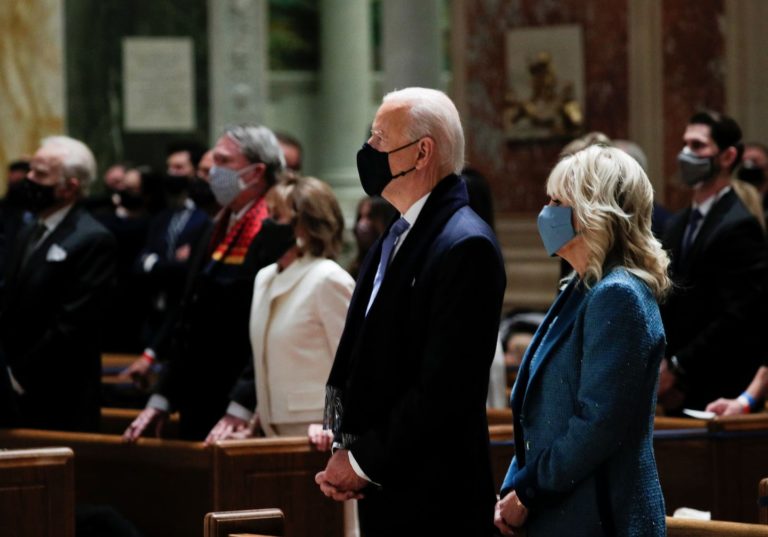
In recent days, Cardinal Blase Cupich of Chicago has described the pre-inauguration statement issued by USCCB President and Archbishop of Los Angeles José Gómez as “unprecedented” for what – in any non-partisan perspective – were actually quite temperate warnings to President Biden that the Church will not ignore his departures from clear Catholic teachings. In fact, the Chicago Cardinal has become rather obsessive, tweeting out what some have called a Twitter “storm” about the whole affair.

Cupich’s criticisms of his fellow bishops are themselves also quite unprecedented. Then again, the thing that’s most “unprecedented” – that’s given rise to these recent in-house Catholic squabbles – is the election of a self-described “Catholic” president, who not only believes personally that abortion, gay “marriage” (he performed one as vice-president), transgenderism (“the civil rights issue of our time”), and much more are matters of overriding political urgency, despite the long teachings of the Church and American history. He’s determined – actually seems to be going out of his way – to impose those views. On all of us.

But there’s even worse. As we’ll soon see – I hope to be wrong about this – he and the people he is appointing are poised not only aggressively to advance bad policies, but also to curtail religious liberties where they conflict with the tenets of the Alternative Creed that many Democrats – and not only them – have now embraced. It’s not only going to be the Little Sister of the Poor this time, though they will be back in court again soon. It’s Catholic (and other religious) adoption agencies, poverty programs, hospitals, schools, maybe even parishes or dioceses that are too starkly Catholic.

The Courts or a stray Democrat or so in Congress may stop some of the worst from happening. But that’s a slender hope with so much in play.

Click here to read the rest of Professor Royal’s column at The Catholic Thing . . .
In Praise of Dispassion

Sometimes we say of people emerging from crises that the hard times brought out the best in them. But that’s not always true.

Let’s be honest: there are a lot of little people out there. I’m not speaking of the poor, the marginalized, or the diminutive in stature. I mean the moral midgets whose formerly quiet lives have lately been amplified to a deafening level by social- and other media platforms. These are people emboldened by the scope of the Internet and the relative anonymity it affords.

Some of the best advice ever given is that one ought to think twice before speaking. But we seem to have lost a vital component necessary to think even once: restraint. We’re not restrained, because many believe that blurting out the first thing that pops into one’s head is a sign of “authenticity.” It’s not.

We really need to be more stoic. I’ll capitalize that word in a moment.

The Oxford English Dictionary defines “stoic” as a “person who practises repression of emotion, indifference to pleasure and pain, and patient endurance in adversity.”

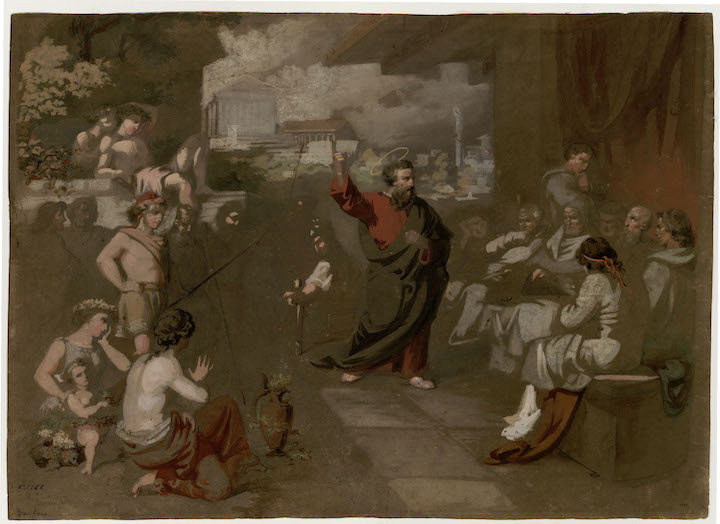
That’s actually in the capital-S “Stoic” entry, which begins, as it should, with mention of the Greek philosophical school. That’s the Stoicism I’m thinking about, although I mean to connect it to Christianity. And why not? Saint Paul did.

Click here to read the rest of Mr. Miner’s column at The Catholic Thing . . .
Another Sort of Reset

St. John Paul II used to tell a story – a true story – about a colleague of his at a Polish university where the future pope was teaching ethics. The colleague was a physicist who claimed that he was an atheist when he was sitting at his desk, but found himself believing in God when he went out hiking in the mountains.

Ever since I read that story, it’s come back to me, with force, in different situations. You could simply read it as yet another example of the follies of intellectuals. So far as I’ve heard, the professor in question never resolved this contradiction, which you might think would be the central occupation of his professional and private lives.

But we’re a strange species and, in my experience, intellectuals are hardly alone in harboring starkly contradictory impulses on momentous matters, which they can’t resolve by their usual means.

Still, to me, his case is a sharp reminder that we all need to break out of the hot-houses of thought and action that we tend to create, insulating ourselves from reality, never more so than in modern technological societies, particularly just now by the digital revolution. And the lockdowns this year, which drove many of us to increased screen time, only made bad things worse.

Click here to read the rest of Professor Royal’s column at The Catholic Thing . . .