Recent News

Before 1066 and All That

As a brief respite from the turmoil in Church and State these days, I’ve been indulging myself with a very pleasant read through Alfred Duggan’s novel (1960) The Cunning of the Dove – a fictional re-creation of the turmoil in Church and State in the days of King Edward the Confessor (1042-1066). Some things, it seems, never really change.

Duggan was a friend of Evelyn Waugh’s, a conservative Catholic, a powerful yet graceful writer who deserves to be better known for a series of novels set in the Middle Ages. As Waugh wrote of him: “This century has been prolific in historical novels, many garish, some scholarly. I know of none which give the same sense of intimacy as Alfred’s – as though he were describing personal experiences and observations.”

There’s probably no more realistic and insightful account of the life of a saintly king. Saintly rulers are a great rarity: after St. Edward there’s St. Louis and – who? Duggan’s novel raises a question: Can a saintly man also be a good ruler? To run the worldly city well requires worldly – not merely heavenly – virtues. Hence his title, which shuffles the Gospel verse so that the innocent dove (Edward) is as cunning as the serpent.

A hard truth, one that a Christian instinctively resists.

Click here to read the rest of Dr. Royal’s column at The Catholic Thing . . .
How Long, Lord?

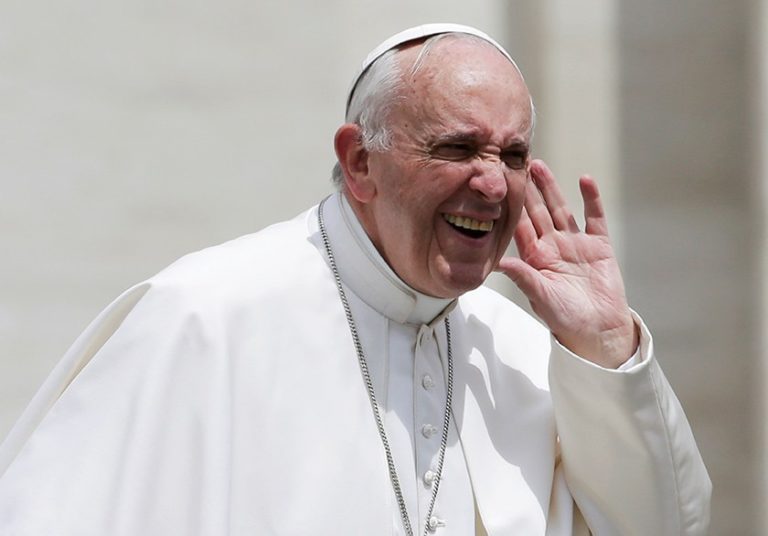
I’ve been on the road and much occupied the past two days; my first glance at the news about the Vatican’s request that our American bishops not vote on steps to resolve the abuse crisis came as I was boarding a plane. It’s been almost twenty-four hours since then, as I’m writing – and trying, on the move, to catch up with this odd development. Second thoughts may follow, but for now, I find it hard to believe that it’s not just a bad dream.

The Vatican knew for months that the bishops would deal with abuse at their regular Fall gathering. The pope asked them to cancel it and hold a spiritual retreat instead until the heads of bishops’ conferences from around the world meet in February. It’s hard to say with any degree of precision what Pope Francis fears might happen at such a gathering.

We’re hearing vague claims that decisions by the American bishops might conflict with canon law. But when has this papacy ever been held up by law – or wanted bishops everywhere in the world to follow universal rules – when it really wanted to get something done?

Whatever the fear, to wait until the very day the meeting opened to request no voting take place is almost without precedent. For many Americans, sad to say, the pope has probably just confirmed what he was forced to admit in Chile: he’s part of the problem.

Click here to read the rest of Dr. Royal’s column at The Catholic Thing . . .
Code 33: “Daredevil” Season 3

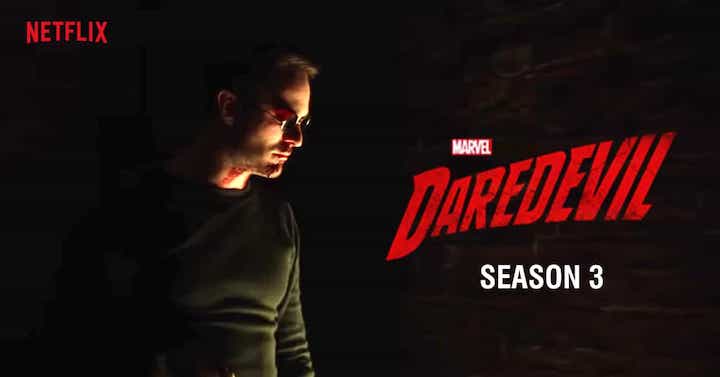
Our friend Fr. George William Rutler lives in the rectory adjacent to the Church of St. Michael in the Hell’s Kitchen neighborhood on Manhattan’s West Side – right in the middle of the territory over which the comic-book hero Daredevil stands guard like a gargoyle. I wonder if Fr. Rutler has ever seen this particular lapsed Catholic hiding in the shadows of his great church.

Daredevil is the alter ego of Matt Murdock (played by Charlie Cox), a blind lawyer, whose inability to see has amplified his other senses. Fr. Rutler would be a much better confessor than the fictional, diffident Fr. Paul Lantom (Peter McRobbie), and he would surely refute Matt’s angst-filled assertion that, in crime-fighting, “darkness only responds to darkness.”

Besides, Fr. Rutler knows how to box, a skill Murdock practices almost without cessation through all thirteen episodes of Daredevil’s third season (now streaming on Netflix) – though Daredevil’s fisticuffs are not in accord with the Marquess of Queensberry Rules (neither do they conform with common sense). Daredevil is admired for his vow never to kill the villains he chastens, but few could survive the beatings he dishes out, nor could he endure the thumpings the bad guys mete out upon his apparently concrete skull.

That said, this new season is the best thing in the entire Universe – the Marvel Cinematic Universe, that is.

Click here to read the rest of Mr. Miner’s review at The Catholic Thing . . .

Synod 2018: An Intermediate Reckoning

A few days ago, I promised one last report on the Synod and its final document, but only after I had taken time to read the whole text – which still only exists in Italian – and to consider it carefully. There were many quick journalistic reactions, useful in themselves, but they tend to focus on the usual controversial points and stir up emotions that are then forgotten within a couple of news cycles. If we want to be a Church, however, that does more than just try to grab onto a few shreds of truth among the swirling digital and spiritual waters around us, we owe it to ourselves to make a serious effort – even in online forums such as TCT – whenever we can to move more deliberately, dive more deeply.

Still, it’s less than a week since the final document was approved, so this is only an “intermediate-range” assessment. More, much more, will need to be said and done in coming days because the fallout from this synod will probably be with us for decades.

But at least I’ve done a first, penitential slog through all 25,652 words now – which is mercifully about 10,000 fewer than the original Working Document – though partly through the fog of jet lag and despite several mishaps in the course of traveling home. (A New Commandment I give unto you: Do not trust NJ Transit to get you from Manhattan to Newark Airport.)

Click here to read the rest of Dr. Royal’s report at The Catholic Thing . . .

Which Future for the Church?

A formerly evanescent creature called “Synodality” has been spotted with increasing frequency in these last days of the Synod on Young People, Faith, and Vocational Discernment (to give the synod its full working title). The bishops vote on the final document later today – and several crucial questions remain in play.

The cynical among observers in Rome say that the emergence of “synodality” as a theme at this late hour is no accident. The explicit LGBT language that was in the Working Document, written prior to the Synod, was effectively blocked early in the process by the firmly expressed opposition of dozens of African bishops and others from around the world.

The first draft of the final document still contains a paragraph about young people being confused and wanting “clear and open” discussion of male and female, sexual orientation, etc., which – if it survives into the final document – could still perpetrate great mischief.

Which is why the Synod Fathers must stand strong when they vote this afternoon against this fallback language as well, because it’s clear that this is a Trojan Horse. Some of the most prominent figures in the Vatican hope to pursue what they are calling a deeper “elaboration” of these themes in anthropological, theological, and pastoral terms.

Click here to read the rest of Robert Royal’s column at The Catholic Thing . . .
A Serious Struggle Starts Today

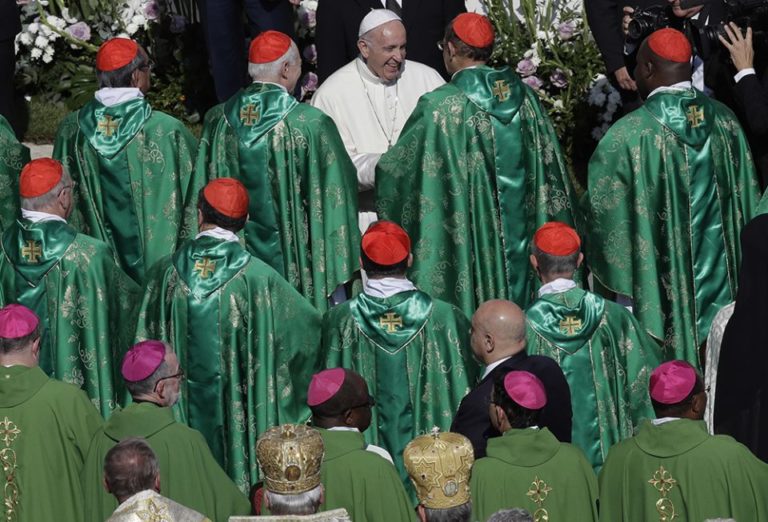
The past three weeks of the Synod were a mere prelude to the main event, which begins as the final week opens today. Tomorrow will be particularly important: the bishops receive the first draft of the final Synod document. So the wrangling will really start, and we will see whether everything that has happened to date is relevant or has just been for show.

In its dalliances with LGBT questions, the Synod has already changed things, just as Amoris laetitia, for all its ambiguities, has gravely changed – and harmed – the understanding of marriage.

Immigration, the role of women, the formation of young people, and their active participation in the Church’s mission, digital evangelization, and various other common synodal topics could have been discussed at the diocesan level.

As we’ve known from the beginning, however, the one subject in the Synod of real significance to the universal Church is homosexuality and the radical challenge the whole LGBTQ+ ideology presents to our Christian anthropology.

Click here to read the rest of Dr. Royal’s column at The Catholic Thing . . .
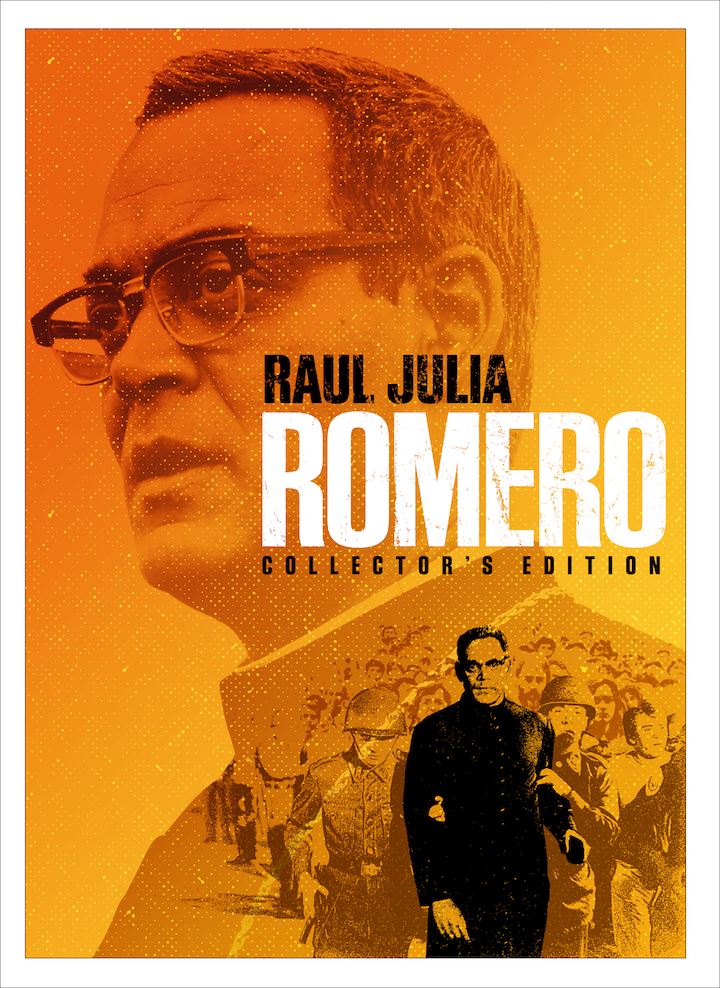
The Mouse That Roared: a Review or “Romero” (1989)

A man can only take so much.

Fr. Óscar Arnulfo Romero y Galdámez, among the Church’s newest saints (along with Paul VI and five others canonized today), was basically a scholarly type. In his homily upon installation as archbishop of San Salvador, the bespectacled Romero said apologetically, “I come from a world of books.” He was thought to be a church mouse, aligned with the Salvadoran establishment, and chosen to be archbishop for just that reason. He was shy and considered a moderate as, perhaps, at the start he was.

But conditions in El Salvador in 1977 were wretched and growing more so: wide gaps in income and equality, with a military ready to use extra-judicial means (i.e., “death squads”) to maintain the status quo. Barely three years into his episcopate, Romero had had enough, and the moderate was radicalized. He became the voice of a kind of revolution, although he never embraced the Marxism that had seeped into several currents of Liberation Theology.

In any case, his last, thundering Sunday sermon would lead to his death.

Click here to read the rest of Mr. Miner’s review at The Catholic Thing . . .

What “Future” without Children?

The “future” has been a hot topic at the Synod on Youth, the Faith, and Vocational Discernment. Virtually everyone, bishops and lay people alike, works hard to find reasons to believe that, despite the dismaying statistics about young people turning their backs on Christianity and the mostly tepid stance of most of those who have not left, we should not give into pessimism or, worse, the sin of despair. There’s “hope” – they say – for the “future.”

But there’s a telling omission. Yes, adolescents and young adults represent the immediate future. Still, if they don’t start having children in greater numbers than the generation or two before them, “the future” is going to hit a demographic wall. And not all that far in “the future.”

All of this is connected, of course, with a topic that Archbishop Bruno Forte – author in 2014 of the scandalous passage in the mid-term report at the Synod on the Family about “valuing” homosexual relationships – said yesterday has not been discussed explicitly in the first ten days: Humanae Vitae, whose 50thanniversary the Church is not exactly celebrating, but kind-of-sort-of remembering this year.

Click here to read the rest of Dr. Royal’s column at The Catholic Thing . . .
Robert Royal Reports from Rome

Robert Royal is in Rome for the Synod on Young People, Faith, and Vocational Discernment. CLICK HERE to read all of his Synod Reports, from the most recent and back (including the 2015 and 2014 Synods on the Family.

Drowning Man

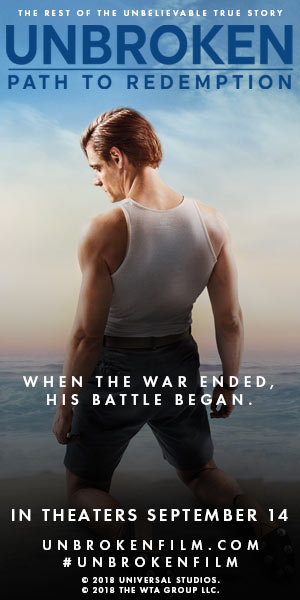
“Where’s Watanabe?” Louis Zamperini asks of an American officer standing next to him. Kneeling on the floor in front of them are several dozen haggard Japanese men, guards from the prison camp where Zamperini had been held, harassed, and tortured by one particular guard, Mutsuhiro Watanabe.

So begins director Harold Cronk’s Unbroken: Path to Redemption, a prequel to Angelina Jolie’s 2014 film of author Laura Hillenbrand’s 2010 book about Olympic runner Zamperini’s experiences as a WWII POW in Japan. The film’s main title card says: “A True Story.” Well, maybe so by Hollywood standards, but whereas Zamperini would return to Japan to seek out Watanabe, he did not do so circa 1950 as the film suggests.

Click here to read the rest of Mr. Miner’s column at The Catholic Thing . . .