Recent News

Fiddling While America – and Rome – Burn?

The famous political philosopher Leo Strauss is reported to have once said that modern political theorists are worse than the ancient Roman emperor Nero. Because contrary to the old saying, they know neither that they are fiddling nor that Rome is burning.

The U.S. bishops held their annual June meeting in Fort Lauderdale a few weeks ago and, to judge from reports, largely spent their time together discussing current politics and changes to a voters’ guide for the Fall midterm elections.

In Rome, just last week, Fr. Antonio Spadaro S.J., editor of the semi-official Vatican publication La Civiltà Cattolica, along with Marcelo Figueroa, a Presbyterian chosen by Pope Francis personally to be editor of the Argentinean edition of L’Osservatore Romano, released another long essay attacking an American religious phenomenon: “The Prosperity Gospel: Dangerous and Different.”

Unlike their previous effort, which argued that collaboration between conservative evangelicals and Catholics was an “ecumenism of hate,” this article drew little attention. Which is no surprise.

Though peddlers of the prosperity gospel have connections to President Trump – who seems to be the real target of the essay – few familiar with religion in the United States would regard that slice of our varied faith groups as particularly prominent. In fact, among most religious people, both Left and Right, it’s regarded as a kind of eccentric Christian sect.

Click here to read the rest of Dr. Royal’s column at The Catholic Thing . . .
Source and Summit: Bishop Barron’s “The Mass”

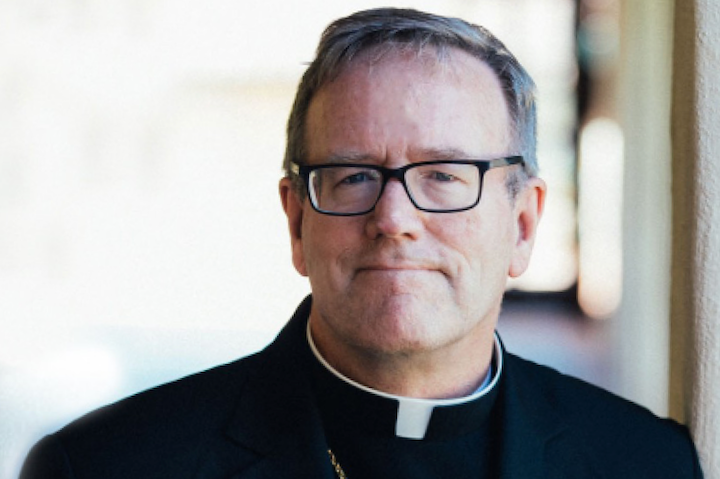
It has been seven years since the release of then Father Robert Barron’s Catholicism, which I reviewed at the time, calling the DVD series “the most vivid catechism ever created.”

In the time between then and now, Robert Barron has gone from being rector of Mundelein Seminary in Chicago to the episcopacy as auxiliary bishop of Los Angeles. But he has continued the Word on Fire apostolate that has brought him much-deserved acclaim.

His new video production, The Mass, is considerably less visually vivid than Catholicism because it lacks the sweep of worldwide location shooting that made that earlier series truly “a Journey into the Heart of the Faith.”

The Mass is a long lecture filmed in one day last October at Our Lady of Sorrows Catholic Church in Santa Barbara, California. Bishop Barron stands at a lectern and holds forth, and he does so brilliantly. There are six segments of about twenty-five minutes each, meaning the bishop spoke for at least 2-1/2 hours that day. If he stopped at several points to take sips of water, those moments ended up on the cutting-room floor.

Click here to read the rest of Mr. Miner’s column at The Catholic Thing . . .

Noli Impedire Musicam

Lenin – who gave the world the socialist murder machine formerly known as the Soviet Union – loved music when he was in exile. Once he returned to Russia, to spark the Bolshevik Revolution, he said he couldn’t much listen to music anymore: “It affects your nerves, makes you want to say stupid nice things and stroke the heads of people who could create such beauty while living in this vile hell.”

There was, is, and always will be a kind of radical Lover of Mankind who will sacrifice saying “stupid nice things” and even actual living people to some harebrained scheme that makes our fallen world still more vile. But there’s a lesson here, even for us in well-off, tolerant-to-a-fault societies, who may be tempted to think that our whole lives should be consumed by cultural, political, or spiritual wars.

People in a position like mine may be especially susceptible to this temptation, which is why active measures, in a different key, are necessary. I myself try to play the piano at least a half-hour every morning because it reminds me – if not necessarily people in the house who have to listen – that God’s Creation is a harmony, a discordant harmony to be sure, but a definite concord of creatures, not perpetual warfare.

Many people send me books, good books, about our current turmoil. I appreciate these, but as someone always engaged in heavy reading for several book-writing projects of my own, often can’t get to them or even acknowledge the favor. But a generous TCT supporter gave me a book at dinner this week that has captured my attention: Spiritual Lives of the Great Composers by Patrick Kavanaugh, a conductor who is also director of the Christian Performing Arts Fellowship.


Click here to read the rest of Dr. Royal’s column at The Catholic Thing . . .
Portia’s Suitors: a Review of ABC’s “The Proposal”

My wife and I met in the Seventies; we worked at the same publishing company and dated for far too long. Then I came to my senses, and we were married on April 29, 1984.

Watching three episodes of ABC-TV’s “The Proposal” occasions this remembrance. A woman (or man) looking for a spouse sits in a kind of isolation booth (as it was known on the old “The $64,000 Question,” but here called the “Pod”) and listens to ten suitors serially make the case for why he (or she) would be the perfect spouse. In successive rounds, ten contestants vie for “love” until the last two suitors make final pleas, now face-to-face with Pod Person.

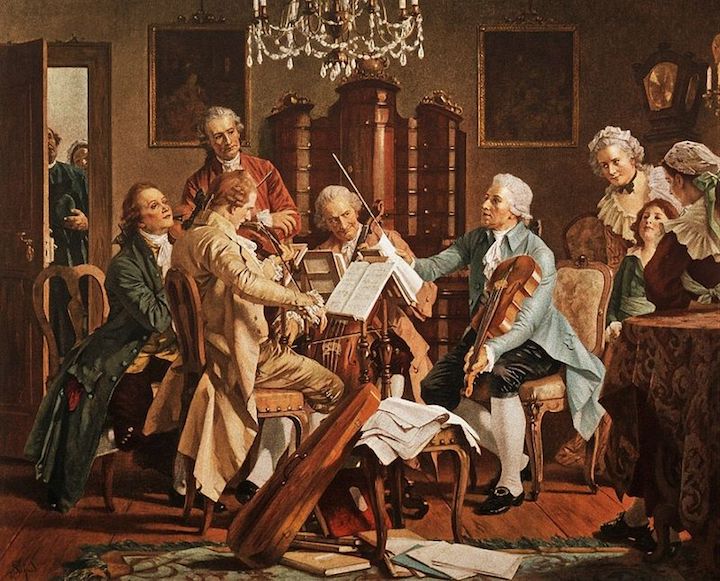
It’s not exactly The Merchant of Venice with Portia judging the Princes of Aragon and Morocco, plus Bassanio and another. The Washington Post called “The Proposal” the “guiltiest of guilty pleasures.” If that’s true for you, for shame!

Host Jesse Palmer promises that this “has never before been attempted on television” and that the contestants have been vetted by a “blue-ribbon panel of matchmakers.”

Click here to read the rest of Mr. Miner’s column at The Catholic Thing . . .
The Unobserved Anti-Christian Bias

When we think about the persecution of Christians at the present moment, what comes to mind for most of us are places like China, the Middle East, or pariah states like North Korea, Venezuela, or Cuba. These situations are occasionally noticed but not exactly well publicized in the secular media. We mostly have to rely on religious outlets, Catholic and Protestant, to do the heavy lifting of keeping us informed about the plight of fellow believers in the modern world.

But there’s a whole other dimension of threats against Christians that goes almost unnoticed. We know of the pressures that churches and religious organizations – and even single believers like florists and bakers – come under these days in America when they resist attempts by State or Federal agencies to impose the new sexual ethos, or to enforce rules on alleged “hate speech” or bias on believers.

The Supreme Court has so far been fairly good at protecting religious liberty. And if President Trump – as is highly likely – appoints another justice (or two?) to the Court, sensitive to Constitutional protections of religion, we may have at least some long-term shelter from the constant anti-Christian drumbeat in the universities, media, and Hollywood.

I’ve been aware for years of similar problems in Europe, where there are generally not the same kind of First Amendment protections or judicial recourse. But I had no real idea of the extent of the problems there – I think almost no one does – though we now have a very useful tool to take its measure.

Click here to read the rest of Dr. Royal’s column at The Catholic Thing . . .
Two Nations, Revisited

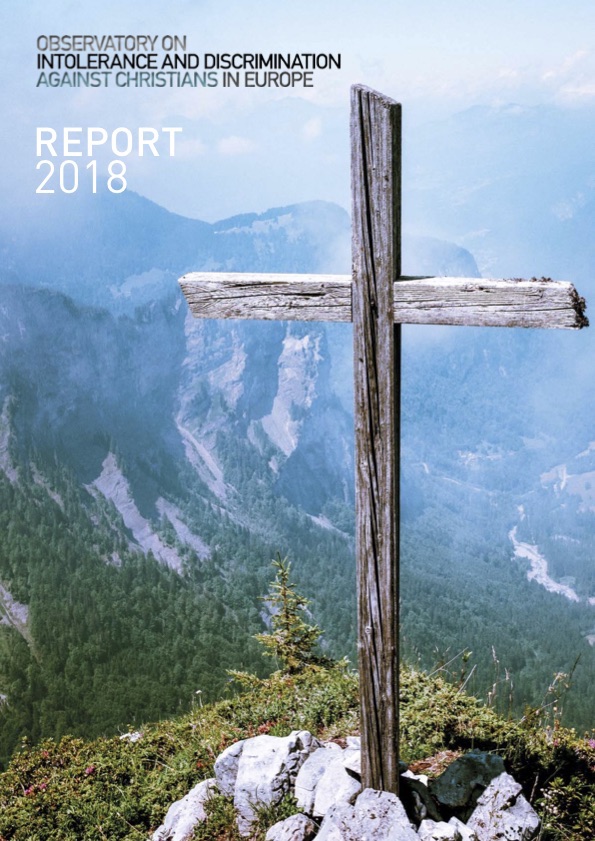
Almost two decades before J. D. Vance’s Hillbilly Elegy, and 15 years before Charles Murray’s Coming Apart, James Q. Wilson, one of the most eminent social scientists of the 20th century, identified the root of America’s fracturing in the dissolution of the family. Wilson, professor of government at Harvard, professor emeritus at UCLA, and a former head of the American Political Science Association, received the American Enterprise Institute’s 1997 Francis Boyer Award at the think tank’s annual dinner. He used the opportunity to introduce a new line of sociological argument: what he called “the two nations” of America.

The image of “two nations,” Wilson explained, harked back to an 1845 novel by Benjamin Disraeli, the future prime minister of Great Britain. These were the separate, non-intersecting worlds of rich and poor. Between these two nations Disraeli described, there was “no intercourse and no sympathy” — they were “as ignorant of each other’s habits, thoughts, and feelings, as if they were…inhabitants of different planets.”

More than a century and a half later, Wilson argued, the United States had also become “two nations,” but the dividing line was no longer one of income or social class. Instead, it had become all about the family — specifically, whether one hailed from a broken or intact home.

Click here to read the rest of Mrs. Eberstadt’s column at National Affairs . . .

Satan Loves Porn

In Elise Harris’s report about the Instrumentum laboris [working document] of the upcoming 15th Ordinary General Assembly of the Synod of Bishops (Youth Synod), she states that among the “key issues” mentioned are not only “increasing cultural instability and violent conflicts” but also that “many young people, both inside and outside of the Church, are divided when it comes to topics related to sexuality.”

Frankly, I doubt that when the bishops meet in October they’ll show us a new path to world peace, whereas they probably could help people – young and old – to better understand the truth about sexuality. It’s time we had a thorough, clinical restatement of Humane vitae! God alone knows, of course, what may actually emerge from the Synod.

Ms. Harris adds:

Things such as precocious sexuality, sexual promiscuity, pornography, displaying one’s body online and sexual tourism, the text said, “risk disfiguring the beauty and depth of emotional and sexual life.”

Although dated May 8th, the Instrumentum laboris was made public just last week, and, as of today, the text is available on the Vatican website only in Italian.

Click here to read the rest of Mr. Miner’s column at The Catholic Thing . . .
Francis Condemns “Eugenic” Abortions and Fake Marriage

I’d been on the road for much of the past week and hadn’t been very carefully following the news. But I woke yesterday to the heartening news that Pope Francis had strongly condemned selective abortion and the various attempts to redefine marriage as something other than a life-long commitment between one man and one woman.

Even more, he did so off-the-cuff, departing from the text he had prepared to deliver to the Forum delle famiglie, an Italian family association. It’s usually been on just such occasions – when he speaks spontaneously and “from the heart” – that he’s delivered the most troubling remarks of his pontificate. It was largely because of those remarks and his early criticism of Catholics who are constantly “insisting” and “obsessing” on life issues and marriage that he alienated and, sad to say, even lost the confidence of many active Catholics – even before the ambiguities and implied infidelities of Amoris laetitia.

He has, of course, condemned abortion and gay “marriage” on multiple occasions. But the world, Catholic and not, seemed to sense that his heart wasn’t in it. The coverage of his recent remarks in the main secular outlets was very brief, usually just reproducing parts of an Associated Press story – quite a contrast to the extensive coverage when he seemed to be moving towards modern culture.

The Wall Street Journal made the obvious observation that the latest remarks were “unusually strong for a pope who has generally played down medical and sexual ethics and taken a strikingly conciliatory approach to gay people.”

Click here to read the rest of Dr. Royal’s column at The Catholic Thing . . .
Power without Piety

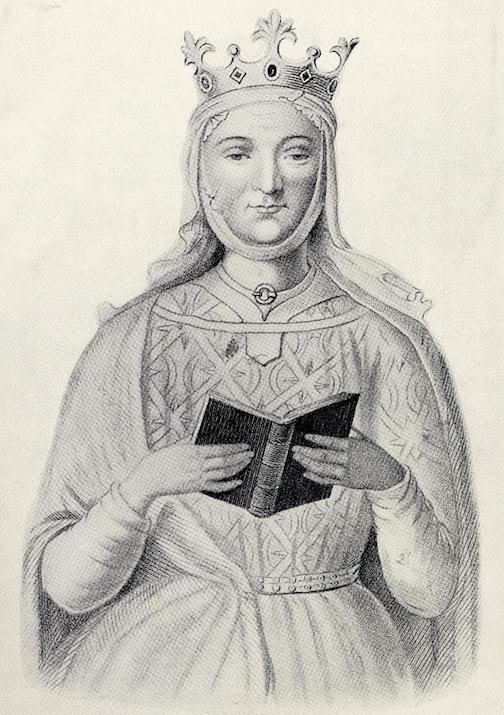
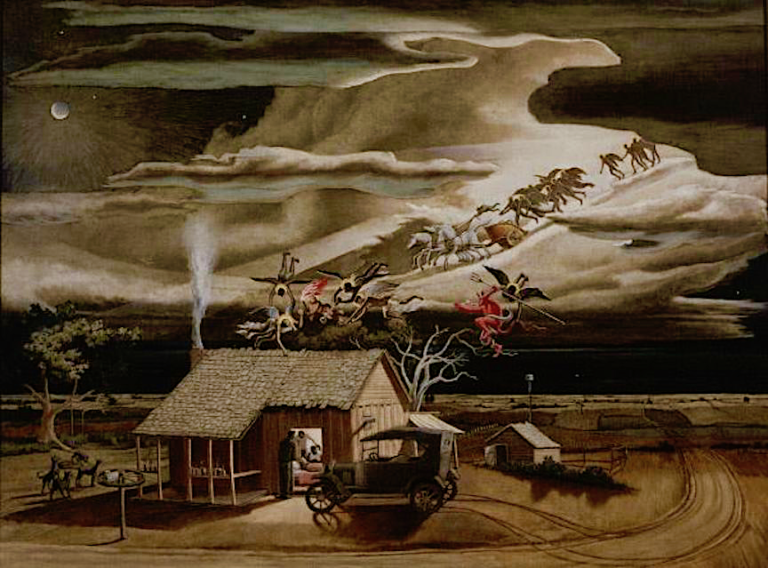
Historians agree, generally, that Eleanor of Aquitaine (1122-1204) was extraordinary but disagree, specifically, about what made her remarkable. Some declare that around this great lady coalesced the principles of chivalry and courtly love. Others maintain that nobleness was a stranger to her houses and courts and that the tales of valiant knights and fair ladies are woolgathering.

Eleanor was first a queen of France and then of England. She was mother to ten children (two in her first marriage to Louis VII of France, then eight with England’s Henry II). Among those she bore to Henry were kings Richard the Lionheart and John – characters known well from such films as The Adventures of Robin Hood(1938) and The Lion in Winter(1968). That latter film (for which Kate Hepburn won an Oscar) correctly notes that Henry imprisoned Eleanor for sixteen years after she supported an insurrection by his own sons.

In Eleanor’s day, the people of Aquitaine were as Spanish as French. Indeed, they were part Basque, a people who still covet their separate identity. Her native language was Occitan, also called Langue d’Oc – “oc” being the dialect word for “yes.” In Southwestern France today, some provincial writers employ Occitan or a modern version of it, Provençal (common, in several dialects, to all of Southern France). The area is still referred to as Languedoc, especially when referring to the region’s wines. In her day, the duchy comprised all of the southwest from Poitiers through Bordeaux to Lourdes and the Spanish border.

We know Eleanor was beautiful because troubadours who came to her court wrote songs fairly swooning over her loveliness.

Click here to read the rest of Mr. Miner’s column at The Catholic Thing . . .
Sexual Revolution: second thoughts

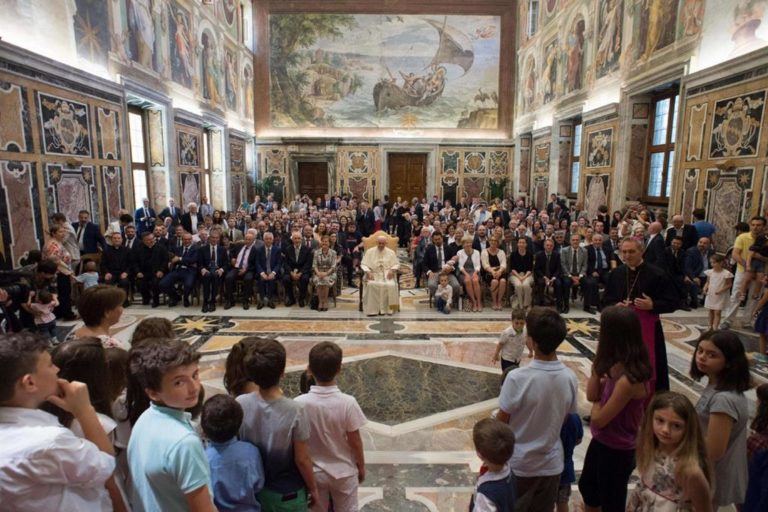
Fifty years after the sexual revolution promised female empowerment through casual sex “without consequences,”scholars — including FRI’s Mary Eberstadt — are looking into the far-reaching social effects of that revolution.

Click here for more information.